Unpacking Checklist: What to Open First After a Move
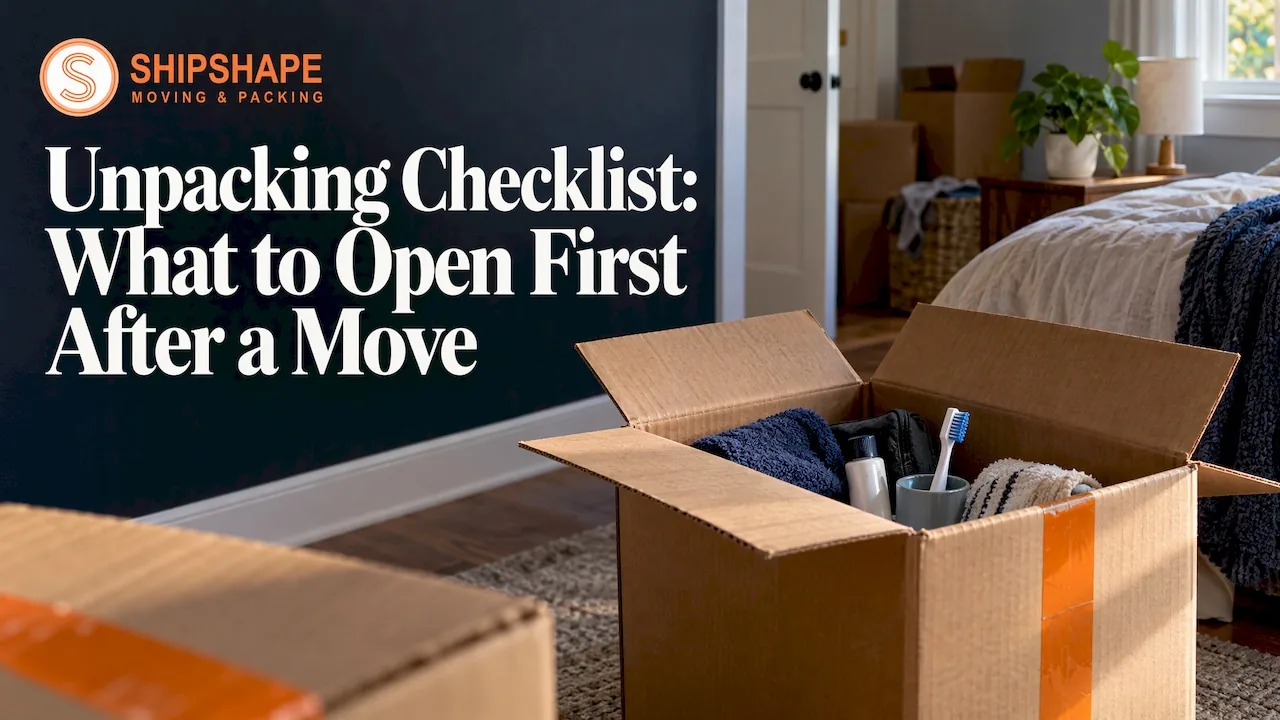
The fastest way to unpack is to open boxes in a set order: first-night essentials, then the kitchen, bedrooms and bathrooms, then shared living areas, and last the closets, storage areas and garage. This checklist gives you that order, what goes in a first-night box for each person in your household, and a realistic pace for the first week. It comes from the way we plan the end of a move at ShipShape Moving, where the job is not finished until you can sleep, shower and make breakfast in your new place.
Key Takeaways
- Pack a first-night box before moving day and keep it with you, not on the truck: bedding, toiletries, chargers, medications and work or school gear.
- Unpack the kitchen, bedrooms and bathrooms first, then common areas. Closets, storage and the garage come last, as the National Association of Realtors advises.
- Finish one room at a time. Empty the boxes, flatten them, and only then organize.
- Work in timed sessions, such as 45 minutes on and 15 minutes off, and set small daily goals.
- Labels written during packing decide how fast unpacking goes. Label by destination room, not by contents alone.
Table of Contents
- The First-Night Box: What Goes In It
- Before You Open a Single Box: Arrival Checks
- Day One: The Short List
- The Room-by-Room Order
- Keep Clutter From Winning: How to Work Each Room
- Pacing: The 45-and-15 Method
- The Week-One Checklist
- What We Think About Unpacking
- When It Makes Sense to Hand Off the Hard Part
- FAQ
- Sources
The First-Night Box: What Goes In It
The first-night box is the one container you open before any other. It exists so that at 9 p.m. on moving day you are not tearing through twenty identical cartons looking for a toothbrush. Pack it last, mark it clearly on every side, and carry it in your own car or with you. Do not let it ride on the truck.
The NAR guide suggests the first-day unpacking should cover bedding, toiletries, phone chargers, medications, work or school equipment, and getting perishable food into the refrigerator. Build the box around that list, then add what your household specifically needs.
For every adult
- Phone charger, plus a power strip or extension cord so one outlet can charge several devices
- Toiletries: toothbrush, toothpaste, soap, shampoo, deodorant, any skin or contact lens care
- One towel each and a roll of toilet paper
- A full change of clothes and pajamas
- Medications, prescriptions, glasses and a basic first-aid kit
- Wallet items, keys, ID, and the folder with your lease or closing papers
- Laptop and its charger if you work from home
For children
- A favorite stuffed animal or blanket, which matters more than almost anything on this list
- A change of clothes and a spare set in case of accidents
- Bedtime books, a night light and a few quiet toys or tablets with chargers
- School supplies and devices if class resumes the next day
- Snacks and a refillable water bottle
For babies and toddlers
- Diapers, wipes, diaper cream and a changing pad
- Bottles, formula or feeding supplies, and a few burp cloths
- Two or three sleep sacks or crib sheets, and the pieces needed to set up the crib
- Pacifiers and any soothing items for sleep
For pets
- Food, bowls, a few days of any medication
- Leash, litter box and litter, waste bags
- A bed or blanket that smells like home
For the household
- Paper plates, cups, plastic utensils and a few paper towels
- A box cutter, scissors, tape and a marker for labeling
- Trash bags and all-purpose cleaner
- Light bulbs, a flashlight and a basic tool kit with screwdriver, hammer and a wrench for bed assembly
- Sheets, pillows and a blanket for each bed
- Coffee, a kettle or a coffee maker, and enough snacks for breakfast
If you are moving in the Bay Area, where many homes are older and layouts vary, add a small stepladder or a few extra bulbs. Fixtures in rental units often come without any.
Before You Open a Single Box: Arrival Checks
Spend the first fifteen minutes walking through the place before the crew finishes bringing everything in. It is much easier to fix a problem when the rooms are still empty.
- Find the safety shutoffs. Realtor.com recommends locating the circuit breaker box and the main water shut-off valve before you move in, so you are ready if something goes wrong. Label the breakers if they are not already marked.
- Look over the rooms. Check floors, walls, windows and doors for existing damage and take dated photos. This protects your deposit if you rent.
- Test the basics. Run the faucets, flush the toilets, switch on lights and the heater, and open the refrigerator. Note anything that does not work.
- Handle the locks. Realtor.com lists changing the locks after closing as an essential safety step for new owners. If you rent, ask your landlord how rekeying is handled.
- Walk the movers through the floor plan. Tell the crew which room is which so boxes and furniture land where they belong. This single step saves hours later.
For small household snags you find during this walk-through, such as a slow drain or a loose outlet cover, a set of household repair and troubleshooting guides can help you decide what you can handle yourself and when to call a professional.
Day One: The Short List
Day one is not about making the house look good. It is about making it livable. Here is the order we recommend.
- Open the first-night box and put toiletries, towels and toilet paper in the main bathroom.
- Assemble the beds. Set up frames, mattresses and bedding for every sleeper before you do anything else. A made bed at the end of a long day is the best reward in a move.
- Stock the refrigerator. Put perishable food away right away, and set up a small breakfast station with coffee, bowls and a few utensils.
- Charge devices and set up work or school gear. If a parent is working or a student has class tomorrow, a functioning desk matters more than the living room.
- Set up internet and TV if you did not arrange service ahead of time.
- Break down empty boxes as you go and stack them by the door or in the garage so floors stay clear.
- Stop. NAR notes that everything does not need to be done on the first day or even the first week, and you will make better decisions rested.
The Room-by-Room Order
The NAR guide says to go room by room, starting with the kitchen, bedrooms and bathrooms, then important common areas, leaving closets, storage areas and the garage for last. Here is how that looks in practice, with what to finish in each space before moving on.
| Order | Room | Unpack first | Can wait |
|---|---|---|---|
| 1 | Bathrooms | Towels, toiletries, shower curtain, medicine cabinet items | Decorative items, backup supplies |
| 2 | Bedrooms | Beds, bedding, a few days of clothes, lamps | Off-season clothes, keepsakes |
| 3 | Kitchen | Plates, cups, cookware you use daily, pantry staples, trash and recycling setup | Specialty appliances, serving ware, holiday items |
| 4 | Living areas | Furniture placement, TV, lamps, rugs | Books, decor, art |
| 5 | Home office | Desk, computer, chargers, files | Archive boxes, supplies |
| 6 | Closets and storage | Hanging clothes, shoes | Everything else |
| 7 | Garage and basement | Tools you need for assembly | The rest |
Kitchen
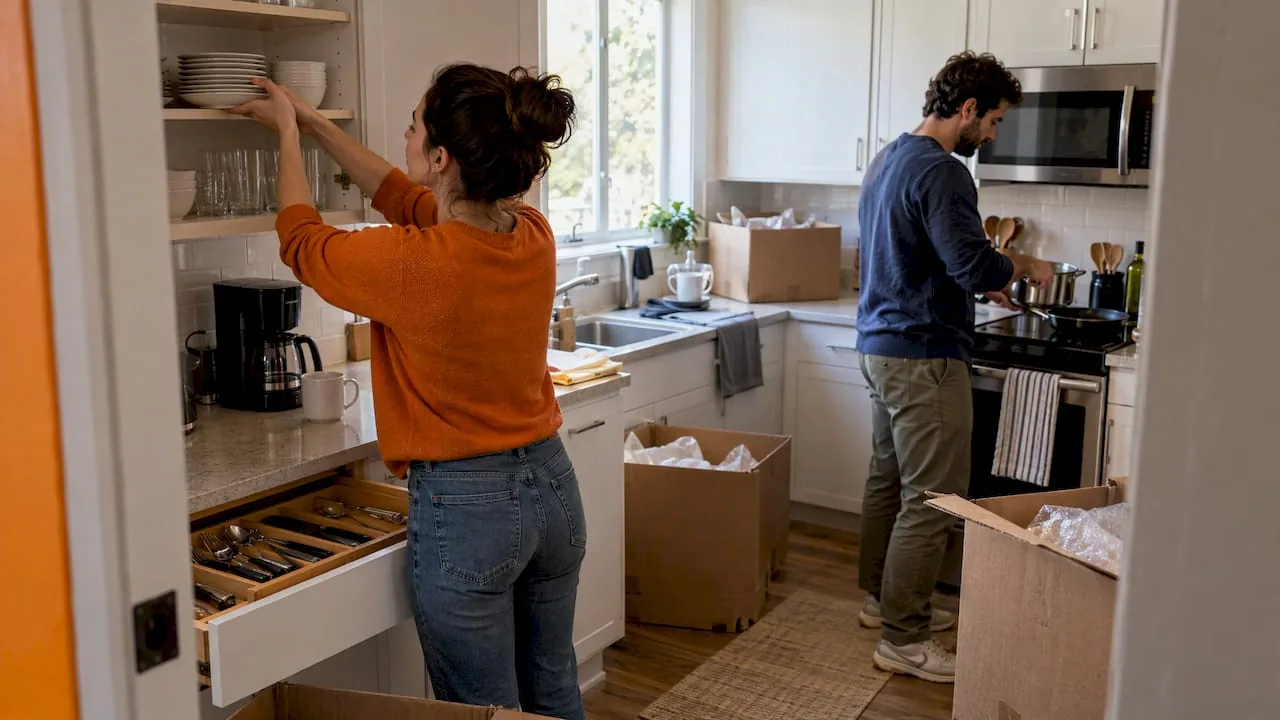
The kitchen has the most boxes and the most decisions, so give it a full session of its own. Start with everyday dishes, glasses, utensils, a pot, a pan and a knife set. Wipe shelves before you fill them, and put things where you will use them: mugs near the coffee maker, pans near the stove. Leave rarely used items in their boxes until you know how the space works.
Bedrooms and bathrooms
Unpack clothes in stages. Hang what you wear weekly and leave off-season garments packed. For children’s rooms, set up the bed and familiar toys first. A familiar room helps kids settle faster, and the rest can follow.
Living areas
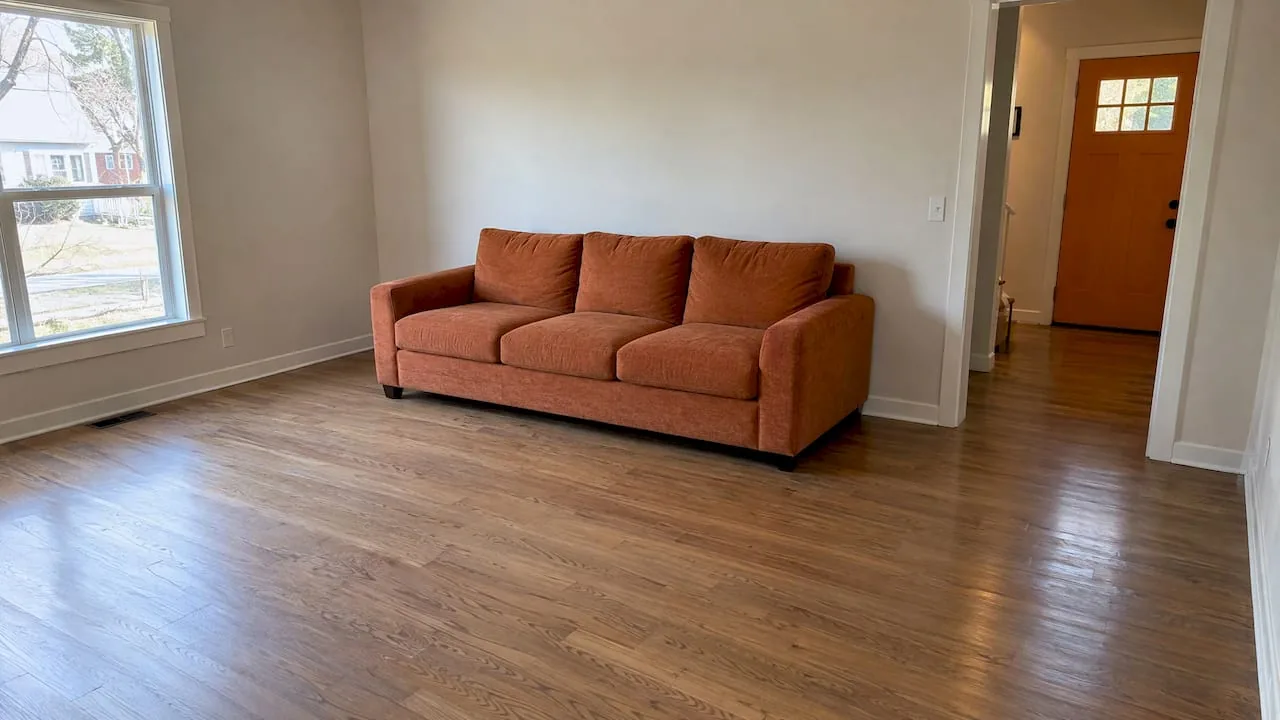
Place large furniture first, then fill the shelves. Moving a sofa after the boxes are open is how backs and walls get hurt, so decide the layout before you unpack decor.
Closets, storage and the garage
These come last for a reason: nothing in them is urgent. If you find that you own more than the new place can hold, this is the moment to decide what to donate or store. When you are weighing whether to rent space, a guide on what size storage unit you need can help you estimate how much room your overflow will take.
Keep Clutter From Winning: How to Work Each Room
The usual unpacking trap is opening boxes everywhere and finishing nothing. Avoid it with a simple loop for each room:
- Bring in all the boxes labeled for that room and nothing else.
- Open every box and pull out the contents.
- Flatten and remove the empty boxes and packing paper right away. The NAR guide recommends unpacking all boxes and discarding them before organizing and putting items away.
- Sort into three piles: keep here, belongs in another room, and donate.
- Put things away, then close the door on that room and call it done.
A room that is truly finished gives you a place to retreat to. Ten half-open rooms give you stress.
Pacing: The 45-and-15 Method
Unpacking is physical, repetitive and full of small choices, which is a recipe for burnout. NAR suggests setting a timer and working for 45 minutes followed by a 15-minute break. Use the break to drink water, eat something and look at what you just finished.
Try these habits too:
- Set a daily goal you can reach, such as “kitchen done” or “all bedroom boxes empty”.
- Stop at a natural end point, not when you are exhausted, so tomorrow starts easily.
- Save decor and art for last. They make a home feel finished but do not affect daily life.
- Ask for help with heavy lifting and with the jobs that stall you, such as the garage or the book boxes.
- If you have young children, consider arranging for them to stay with family on moving day, since Realtor.com lists this as a safety recommendation around open doors and heavy items.
The Week-One Checklist
Once the main rooms work, use the remainder of the week for tasks that make the home truly yours.
- Days two and three: finish the kitchen, set up the living room, and unpack the rest of the bedroom and bathroom boxes.
- Days four and five: home office, hall closets, entryway and a place for coats, shoes and mail.
- Days six and seven: the garage, storage areas, and remaining odds and ends.
- Throughout: keep a running list of missing items, damaged items and things you need to buy, such as shelf liner, hooks or a shower rod.
- Check your inventory. Compare what arrived against your list. If anything was damaged, photograph it and report it to your mover promptly, since claims are easier to handle when the details are fresh.
- Update your address with your bank, employer, insurers, subscriptions and the post office.
What We Think About Unpacking
Most people think a move ends when the truck is empty. In our experience it ends when the family has slept well, eaten breakfast and found the coffee mugs. That is why we treat unpacking as part of the plan from the first call, not something that happens after we leave.
Clear communication matters here more than anywhere. When we know your floor plan, the number of people in your household and which items you will need first, our crews can place boxes in the right rooms and keep the essentials easy to reach. Careful packing and labeling by room is what makes the NAR order of kitchen, bedrooms and bathrooms first actually possible. A box marked “misc” sends you hunting. A box marked “Kitchen: everyday plates” sends you straight to the cabinet.
We also think the pace should be kind. A move is a big change for adults and an even bigger one for kids and pets. Aim for a functional home on day one, a finished kitchen by day three, and a settled house by the end of the week. If you want help carrying the load, that is what a professional crew is for.
Dennis
When It Makes Sense to Hand Off the Hard Part
The unpacking checklist works best when the packing was done to match it. If you are tired just reading the list, the easiest improvement is to have professionals pack and label your belongings by destination room, so every box lands where it should and your first-night essentials are easy to find. Our professional packing service covers careful packing and labeling, and our crews handle fragile and valuable items with extra care through white glove handling.

For local moves across Berkeley, Oakland, San Francisco and the surrounding Bay Area, our published rate is $190-$200 per hour, plus a one-time $80 truck fee. Packing, apartment, office and long-distance moves are quoted individually, and we provide written not-to-exceed quotes. See our local moving services or our residential movers page to request a quote. Moving into a Berkeley dorm or student housing? Our UC Berkeley move-in checklist covers the campus specifics, and our moving tips page has more planning advice.
FAQ
What should I unpack first after moving?
Start with your first-night box, then the beds, bathroom and kitchen basics. The NAR guide puts the kitchen, bedrooms and bathrooms first, followed by common areas, with closets, storage and the garage last. Aim for a livable home before a finished one.
How long does it take to unpack after a move?
Most households can have the essential rooms working within a few days, but full unpacking often runs past the first week. NAR advises against trying to finish everything on day one or in week one. Set small daily goals and the work gets done steadily.
What goes in a first-night box?
Pack bedding, toiletries, towels, toilet paper, phone chargers, medications, a change of clothes for each person, basic tools and snacks. Add diapers and feeding supplies for babies, comfort items for kids and food for pets. Keep the box with you rather than on the truck.
Should I unpack room by room or box by box?
Room by room. Bring in only the boxes for one room, empty them, discard the packing material, and then put items away. Opening boxes at random across the house leaves you with clutter and no finished space.
Can movers help with unpacking?
Packing and labeling by room is something we do, and it makes unpacking much faster. For the specifics of what is included in your move, contact us through our services page and we will confirm in your written quote.
Sources
- Consumer Guide: 10 Tips for Unpacking Smartly After a Move, National Association of Realtors
- Your Moving Checklist: Things To Do Before Moving Into a New Home, Realtor.com
- Secrets to selling a house during a pandemic (and beyond), Realtor.com
- Household repair and troubleshooting guides, Fix It Daily
- What size storage unit do I need?