Moving Company: Compare 3 Estimates, Check FMCSA for U.S. Moves

The fastest way to avoid moving scams and surprise fees is a four-step check: get at least three written estimates after a real walkthrough, check USDOT registration and insurance, pick the right valuation coverage, and watch for red flags before you sign anything. Skip any of these and you risk a lowball quote that could increase on moving day, or worse, dealing with a rogue operator who may hold your belongings hostage for cash. The checklist below walks through each step in order.
TL;DR:
- Compare at least three written estimates based on the same in person or virtual walkthrough, and confirm whether each price is binding, nonbinding, or capped.
- A nonbinding estimate may rise by up to 10% under the 110% rule, while a binding estimate with a not to exceed cap cannot increase.
- Released value protection pays $0.60 per pound per item, so a 10 pound laptop valued at $1,500 would receive only $6; consider full value coverage.
- Check an interstate mover’s USDOT number, registration, and cargo insurance, and identify the actual carrier; walk away if a broker will not name its subcontractor.
- Reject unexplained low quotes, large cash deposits, blank bills of lading, and pressure to sign immediately; keep all estimates and agreements in writing.
Table of Contents
- A step-by-step vetting checklist to choose a mover
- How to read and compare moving estimates
- Check credentials, registration, and insurance
- Choosing valuation and insurance for your belongings
- Common red flags and the exact questions to ask movers
- How to arrange accurate quotes: preparing for the walkthrough
- If something goes wrong: disputes, claims, and next steps
- What a reputable mover looks like in practice
- What actually matters when you hire movers
- How ShipShape Moving can help you move with less risk
- FAQ
- Sources
A step-by-step vetting checklist to choose a mover
Start by building a shortlist before you request a single quote. Good sources include referrals from friends or coworkers who moved recently, recommendations from real estate agents who deal with movers regularly, and the FMCSA company search for anyone handling an interstate move. Cross check names against Better Business Bureau profiles to see how a company responds to complaints, not just whether it has any.
Once you have four or five candidates, work through them in a consistent order:
- Call or message each company and ask whether they offer in-person or virtual walkthroughs.
- Schedule walkthroughs for your top three to four candidates within the same week so pricing stays comparable.
- Request a written estimate at the end of each walkthrough, not a verbal number over the phone.
- Confirm the estimate states whether it is binding, non-binding, or binding-not-to-exceed.
- Save every estimate, email, and text message in one folder, labeled by company and date.
Three written estimates, built from the same inventory and the same walkthrough format, let you compare apples to apples instead of guessing which quote is realistic. A phone estimate based on a self-reported box count is nearly worthless once the actual crew shows up and finds twice as many items.
Keep a short record for each company:
- Estimator’s name and the date of the walkthrough.
- Whether the walkthrough was in person or virtual.
- The quoted price, crew size, and estimated hours.
- Any extra fees mentioned, like stairs, long carries, or bulky items.
This record becomes your reference point later if a final bill does not match what you were told. Written documentation, not memory, is what protects you if a dispute comes up.
How to read and compare moving estimates
Movers typically offer three estimate types, and knowing the difference matters more than the dollar figure itself. A binding estimate locks in a fixed price based on the inventory reviewed during the walkthrough. A non-binding estimate is just a prediction. Under FMCSA rules, the final charge on a non-binding estimate can legally be up to 10% more than the original quote, a provision known as the 110% rule. A binding-not-to-exceed estimate protects you from that overage: you pay the quoted price or less, never more, even if the final weight comes in higher than expected.
When you compare estimates side by side, check for the same line items across each one:
- Estimate type: binding, non-binding, or binding-not-to-exceed.
- Crew size and estimated hours for the job.
- What packing materials and labor are included versus billed separately.
- Valuation coverage included by default and the cost to upgrade it.
- Any flat fees, like a truck fee or long-carry charge.
A quote that looks cheaper on paper but skips valuation details or lists a vague “additional fees may apply” line usually ends up costing more than the highest bid that spells everything out.
Check credentials, registration, and insurance
Any mover handling an interstate move needs an active USDOT number, and you can confirm it directly through the FMCSA company search, which shows registration status, safety history, and filed complaints for that carrier. A pattern of unresolved complaints is a stronger warning sign than a single bad review.
Before you commit, confirm a few things:
- Whether the company is the actual carrier doing the move or a broker that will hand your job to a subcontractor.
- The USDOT number matches the name on your estimate and contract.
- A current certificate of insurance, including cargo coverage, not just general liability.
- For local moves, that the company holds the license your state requires, since local moves fall outside FMCSA’s interstate rules.
Brokers are not inherently bad, but you deserve to know who will actually be in your home. A broker that will not name the carrier performing the move, or that gives a different company name on moving day than the one you signed with, is a signal to walk away.
Pro Tip: Ask for the USDOT number in writing and look it up yourself before you pay any deposit.
Choosing valuation and insurance for your belongings
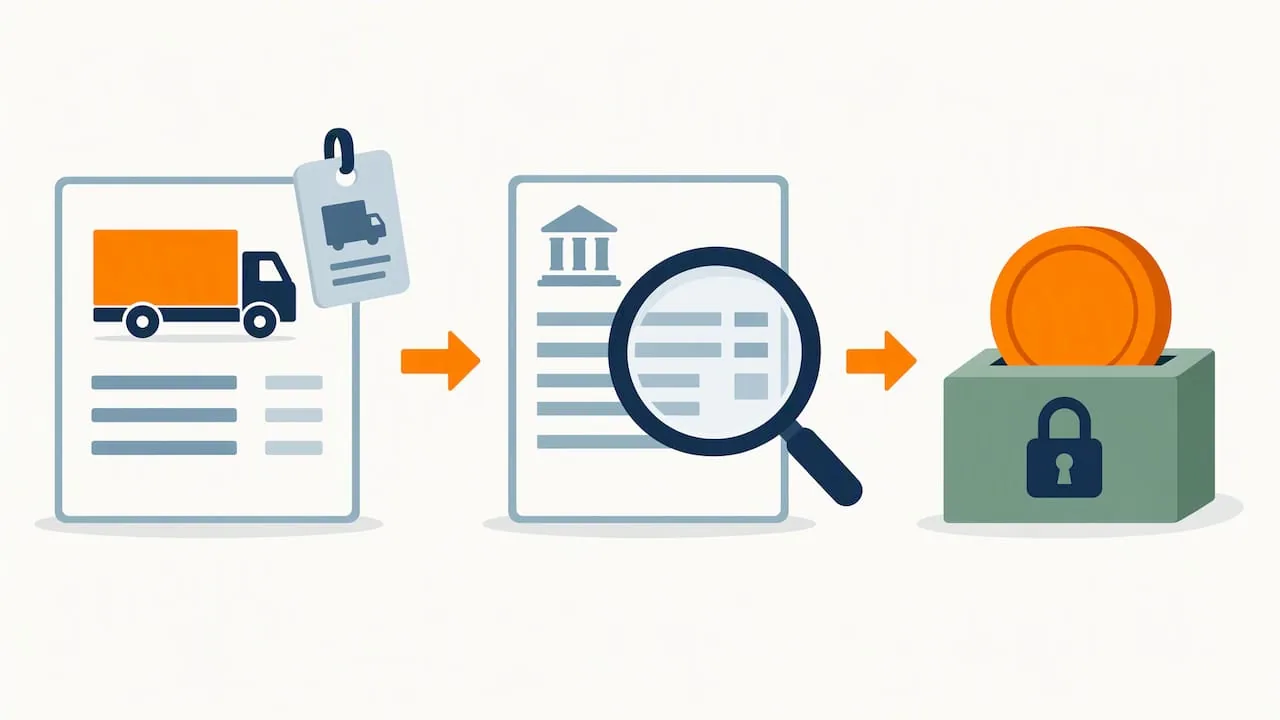
Every interstate mover must offer two valuation options, and the one you pick determines what you get back if something is lost or damaged. Released value protection is included at no extra cost, but it pays out at just $0.60 per pound per article, regardless of actual value. A 10-pound laptop worth $1,500 would net you only $6 under this option.
Full value protection covers repair, replacement, or the current market value of lost or damaged items, and it is the option most people actually need for anything they care about replacing.
Before paying for extra coverage, check two things:
- Review your homeowner’s or renter’s insurance policy, since some already cover items in transit.
- Consider third-party moving insurance for jewelry, art, or electronics that exceed what released value protection would pay out.
If no valuation option is selected, released value becomes the default, so make an active choice rather than letting it happen by omission.
Common red flags and the exact questions to ask movers
Rogue movers tend to share the same tells. Watch for these before you sign:
- An estimate dramatically lower than every other quote you received, with no walkthrough to justify it.
- A demand for a large cash deposit before the move, especially more than a small percentage of the total.
- A bill of lading with blank fields or a price that does not match your written estimate.
- No listed physical business address, only a phone number and a website.
- Pressure to sign immediately or lose your moving date.
Ask every candidate the same set of questions: What type of estimate is this, binding or non-binding? What is your USDOT number? Will your own crew perform the move or will it be subcontracted? How many movers and how many hours do you expect? What is included in packing, and what costs extra? What is the delivery window?
A company that answers clearly and promptly is usually the same company that shows up on time. Vague answers or long response delays during the quote process tend to predict the same during the move itself.
How to arrange accurate quotes: preparing for the walkthrough
A little prep work turns a rough guess into a reliable, comparable estimate. Walk through your home room by room before the estimator arrives:
- List major furniture and boxes per room, and flag fragile or high-value items separately.
- Take photos of anything valuable or already damaged, for your own records.
- Note doorway widths, stairs, or elevator access that could affect labor time.
- Ask for an itemized estimate, not a single lump sum, so you can see what drives the price.
- Record the estimator’s name and the date, since you will want this if numbers change later.
The more specific your inventory, the less likely you are to see a mid-move price increase on a non-binding estimate.
If something goes wrong: disputes, claims, and next steps
Document any damage the moment you spot it: photograph the item, note it on the delivery receipt before you sign, and keep your original inventory for comparison.
- Start a claim directly with the moving company first; most issues get resolved faster this way than by escalating immediately.
- Keep every estimate, contract, and email in one place in case the claim stalls.
- For interstate moves, FMCSA accepts complaints when direct resolution fails; for local moves, your state consumer protection office is the right channel, as outlined by Usa.
What a reputable mover looks like in practice
We built ShipShape Moving around high standards including full licensing and walkthrough-based estimates rather than phone guesses. Our services include local, long-distance, packing, and special handling, and we keep clients updated at every step from the first call to the final box, so there are no surprises on moving day.
What actually matters when you hire movers
If you take one thing from this checklist, make it this: document everything, check registration before you trust a quote, compare at least three estimates built the same way, and insure anything you cannot afford to lose. Movers who hesitate on any of these steps are telling you something. Follow the process, keep your paperwork, and the rest tends to fall into place.
— Ilya
How ShipShape Moving can help you move with less risk
If you want to put this checklist to work without chasing down three separate companies yourself, we offer residential, long-distance, and packing services built on written, walkthrough-based estimates from the start. Our crews specialize in careful handling for families, collectors, and businesses moving on a schedule, with clear communication so you always know what is included and what costs extra.

Whether you need a straightforward local move or a large home relocation with specialty items, you can request a written quote directly through ShipShape Moving and get a real walkthrough instead of a phone guess.
FAQ
How do you pick a moving company?
Get at least three written estimates after an in-person or virtual walkthrough, check the company’s USDOT registration and insurance, and choose the valuation coverage that matches what you are moving. Watch for red flags like unusually low quotes or large upfront deposits, and keep every estimate and agreement in writing.
What is the difference between binding and non-binding estimates?
A binding estimate locks in a fixed price based on your walkthrough inventory, while a non-binding estimate is a prediction that can run up to 110% of the quoted amount under FMCSA’s 110% rule. A binding-not-to-exceed estimate caps your final cost at the quoted price even if the actual weight comes in higher.
What questions should I ask a moving company before booking?
Ask whether the estimate is binding or non-binding, request their USDOT number, and confirm whether their own crew performs the move or a subcontractor does. Also ask about crew size, packing costs, delivery timelines, and any fees that could apply beyond the base quote.
What does released value protection actually cover?
Released value protection is the default coverage on interstate moves and pays out only $0.60 per pound per article, regardless of the item’s real value. For anything valuable, full value protection or third-party insurance offers more realistic coverage.
What should I do if my movers damage something?
Photograph the damage immediately and note it on the delivery receipt before you sign it. File a claim directly with the moving company first, and if that does not resolve it, escalate to FMCSA for interstate moves or your state consumer protection office for local moves, per USA.gov guidance.