How to Move Large Indoor Plants and Trees Without Damage
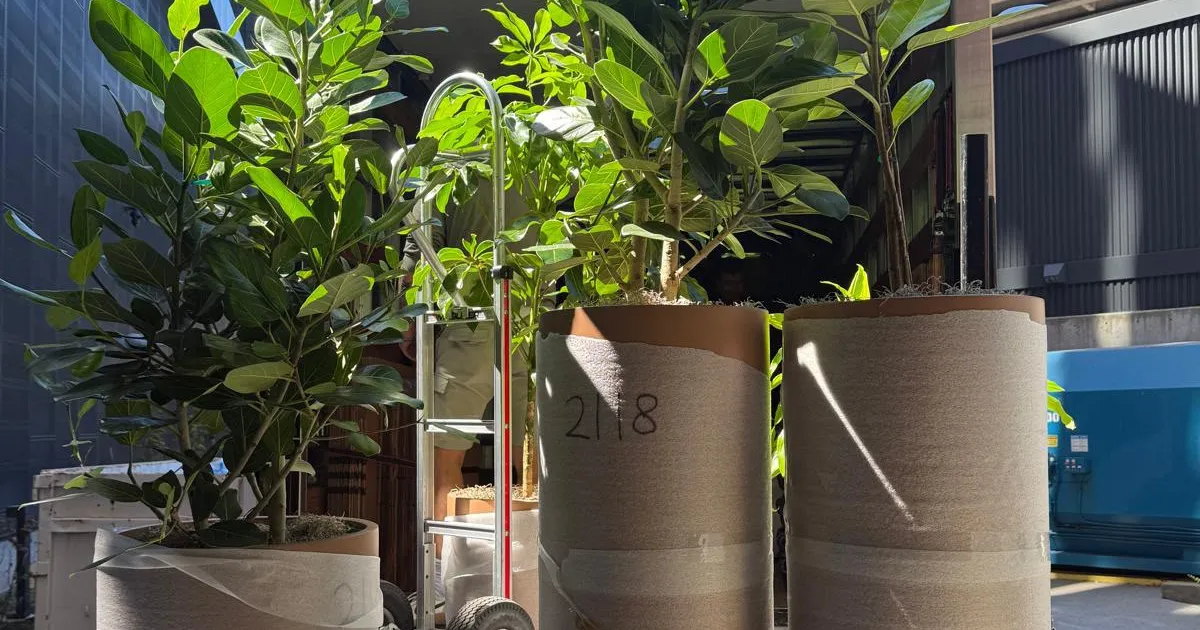
A large indoor tree is one of the hardest things in a home or office to move well. The planter is heavy, the branches spread far wider than the pot, and the leaves bruise or snap the moment they catch on a door frame. A desk can be wrapped in blankets and secured against the side of a truck. A six-foot indoor tree cannot.
This guide is built on what our crews do on real jobs. For several years ShipShape Moving has moved mature indoor trees and planters for a Bay Area company that installs greenery in offices and businesses, so the steps below come from that work, not from theory.
TL;DR:
- Plan the route by the plant's whole shape, not the size of the pot. Branches catch on doors and elevator entrances long before the planter does.
- Wrap each planter on its own and keep every plant upright from the first room to the last.
- Load by size, weight and shape, leave space around the foliage, and set heavy planters where they cannot shift.
- Moving plants into California from another state? Declare them at the border. Inspectors can reject plants that carry pests or were grown outdoors.
Why large plants are harder to move than furniture
Three things make a big plant difficult:
- Weight sits in one place. A mature tree in a large decorative planter is too heavy for one person to carry safely, and all of that weight is in the pot.
- The shape is wider than it looks. Branches extend well past the container and catch on doors, hallway corners and elevator entrances.
- Nothing can be stacked or laid down. Leaves, branches, trunks, planters and roots can all be damaged if the plant is handled like ordinary cargo.
On a commercial job a single plant may travel through an office, into a service elevator, across a loading dock, onto a truck and then through another building before it reaches its final spot. The goal is for it to arrive looking the way it did before the move.
Before move day: plan the route by the plant's full shape
Walk the path from where the plant stands now to the door, and from the new door to where it will stand. Measure the tightest points: door frames, hallway turns, stairwells and the elevator opening. Then measure the plant at its widest and tallest, including the branches.
If the foliage is wider than a doorway, decide in advance how the plant will pass through, rather than discovering the problem while two people are holding it. On our commercial plant jobs, each tree's route is planned by its whole shape, not just its pot.
Moving into or out of an apartment or office building? Book the freight elevator and the loading dock time with building management first. Allow enough elevator time for the plants as well as everything else. Our guide to mover certificates of insurance covers the paperwork many buildings ask for.
Protect the planter, not only the plant
Decorative planters scratch and chip easily. Wrap each planter on its own with protective material so it cannot rub against anything, while leaving the plant itself free and upright. Do not lay a planted pot on its side to make it easier to carry.
If you are moving several plants, mark each wrapped planter with a number or a room name. It makes unloading faster and tells the crew where each plant goes.
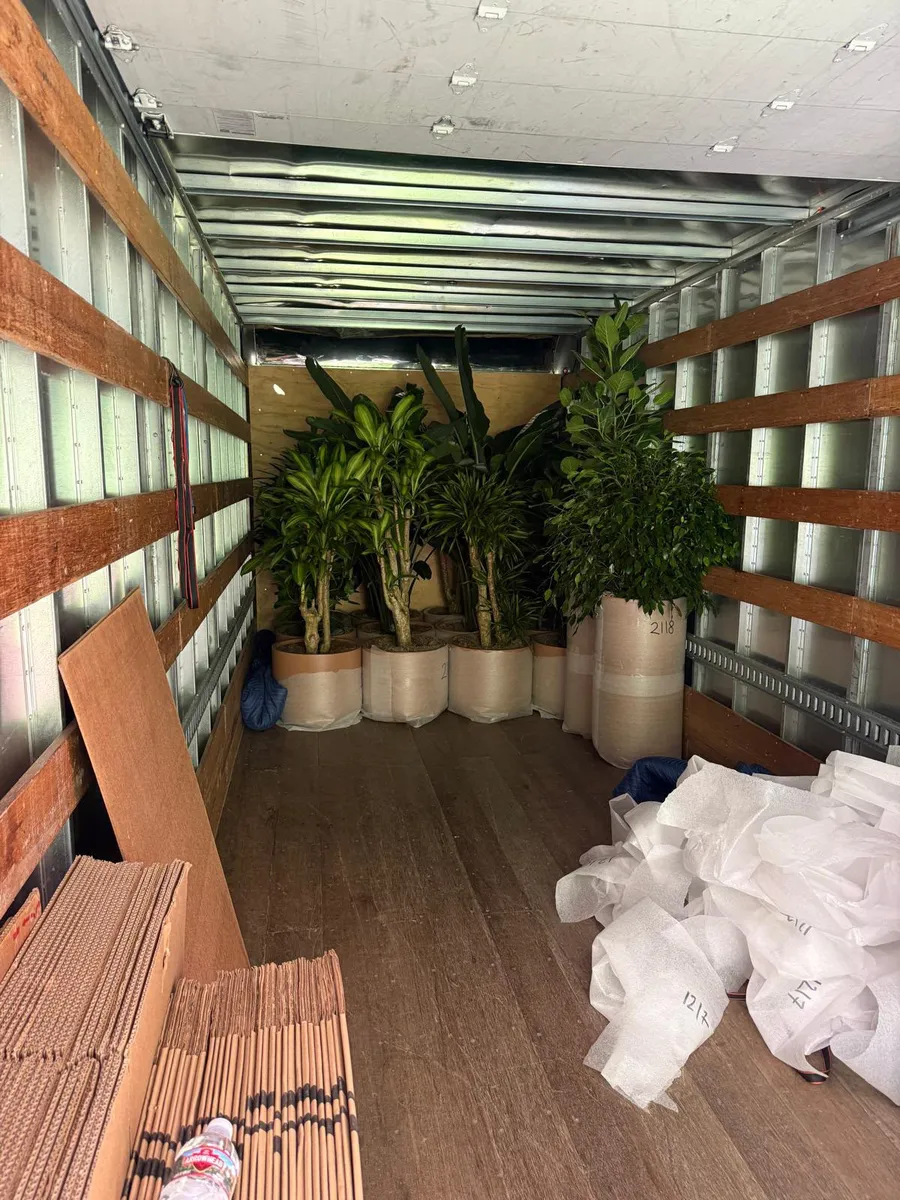
Loading a truck full of plants
Inside the truck, plants need to stay upright and have room around their foliage. Our crews load them by size, weight and shape:
- Heavy planters go where they cannot slide or tip during the drive.
- Each plant gets enough space that its branches and leaves are not crushed against the plant next to it.
A truck loaded this way looks more like a temporary greenhouse than a normal move, and that is the point.
Carrying large plants through a building
Heavy planters go on dollies, not in someone's arms. For large trees, the crew controls the plant from both the planter side and the foliage side, so branches do not swing into walls, door frames or people. In occupied offices this matters twice over, because the crew is working around employees, furniture and finished floors.
Deliver each plant to its final spot
Unloading everything at the entrance creates a second move. Bring each plant straight to the room and the spot where it will live. On our commercial plant jobs, plants go directly to reception areas, conference rooms, offices, common areas and window spaces, so the client's team can focus on the final design instead of carrying planters.

Moving houseplants into California from another state
If you are moving to the Bay Area from out of state, plan for California's border inspection. According to the California Department of Food and Agriculture:
- House plants must be free of surface pests and look healthy, with no visible signs of disease. California's border inspectors may reject and confiscate plants that do not meet this standard.
- Plants should have been grown indoors only, in sterile, packaged commercial potting mix, not in outdoor or backyard soil.
- Owners of citrus plants, pine trees, and fruit and nut trees are strongly discouraged from bringing them unless every quarantine requirement can be met.
- If a moving company carries your plants, the movers should list "house plants" at the top of the shipment inventory and store the plants near the van doors so they are easy to inspect.
- If you drive your plants yourself, declare them to the border inspector and keep them easy to reach.
Rules change, so check with CDFA's Pest Exclusion Branch before you pack plants for a move into California.
Will movers move your houseplants?
On standard household moves, ShipShape treats plants and garden soil as items that stay off the truck: they rarely survive a closed truck and can carry pests across state lines. Our list of what we move and what we can't has the full details. If you are moving houseplants yourself, the planning, wrapping and upright loading steps above still apply.
Commercial greenery is different work. For several years we have moved mature indoor trees and planters for a Bay Area plant company, as planned jobs with the route, loading and delivery worked out in advance. You can read how one of those projects runs in our case study on moving indoor trees for a Bay Area plant company, and see our commercial moving services.
FAQ
Can I bring my houseplants when I move to California?
Usually, if they are healthy, pest-free and grown indoors in commercial potting mix. Declare them at the California border. Citrus, pine, and fruit and nut trees are strongly discouraged. Check CDFA's rules before you move.
Will ShipShape move my houseplants on a home move?
On standard household moves, plants stay off the truck. See what we move and what we can't. For commercial greenery moves, ask us for an estimate.
How do you keep a large tree from tipping in a truck?
Keep it upright, place heavy planters where they cannot slide or tip, and leave space around the foliage so neighboring plants do not press on it.
What is a common mistake when moving a large plant?
Measuring only the pot. On a large tree the branches spread wider than the container, and they are what catches on doors and elevator entrances.