Office Move Checklist for Bay Area Businesses
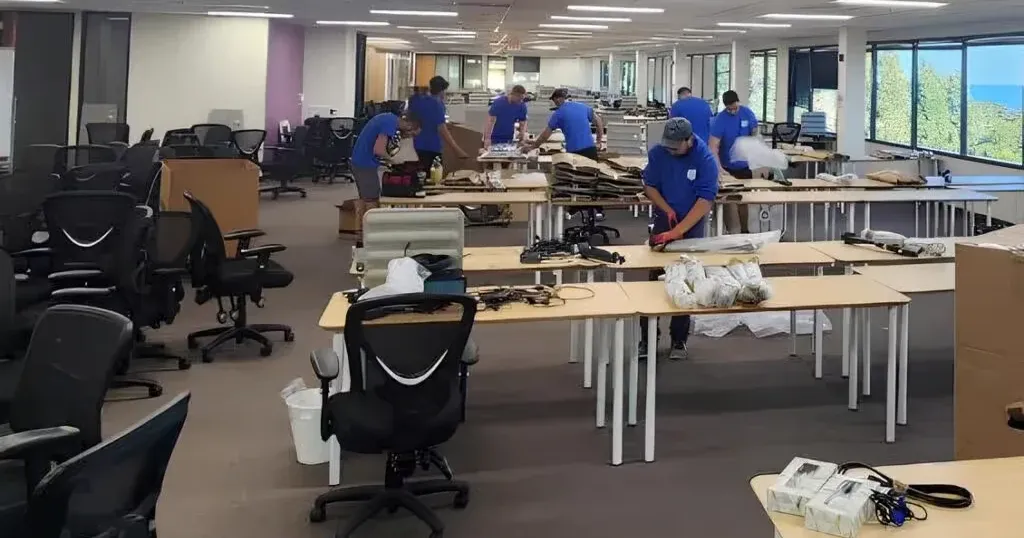
Most of the work in an office move happens before the truck arrives. The buildings at both ends have rules, the IT equipment has to come back up in the right order, and every desk, monitor and file box needs a place to land. Miss one of those and your team spends its first morning in the new office looking for things instead of working.
This checklist is the order we plan office moves in at ShipShape Moving, from the day you sign the new lease to the first morning in the new space. Use it whether you hire us or not.
TL;DR:
- Get the move rules from both buildings first: allowed move hours, freight elevator, loading dock and certificate of insurance (COI) wording.
- Book movers one to three weeks ahead, and earlier for larger or phased moves.
- Label everything to a floor plan: a color per department, a number per workstation, a zone per room.
- Move workstations first so your IT team can reconnect while the rest of the office is still being set up.
As soon as the new lease is signed
- Get the move rules from both buildings. Ask building management at the old and new address for their allowed move hours, freight elevator booking process, loading dock times and certificate of insurance requirements, including the exact wording they want on the certificate. Many buildings limit move hours on weekdays.
- Choose a move window. Evening, weekend and overnight moves are standard in downtown buildings, and they keep business days clear.
- Decide whether to move in phases. Larger offices can move in stages or floor by floor, so the teams that cannot stop come back first.
- Name one person to run the move. Building managers, the movers and your IT team all need a single contact who can make decisions.
- Get the new floor plan. You will label everything to it, so it is worth having early.
One to three weeks before: book the movers
- Book the move. We recommend booking one to three weeks ahead, and more for larger or phased moves. Building paperwork is the usual reason to start early.
- Schedule an on-site walkthrough. A mover should see the space, what is moving and how your teams work before giving a price. Our estimates are built from that visit.
- Send the certificate of insurance wording. Pass the building's exact COI requirements to the mover. We issue certificates directly to building management, naming the building owner and property manager as additional insured, typically within one business day, and confirm the building has accepted them before move day. Our guide to mover COIs explains what buildings look for.
- Reserve the freight elevator and loading dock at both buildings for the same window.
- Plan street loading. In San Francisco, SFMTA issues temporary no-parking and loading-zone permits, and colored curb rules still apply. In Oakland, a load-in that needs street space may need an OakDOT permit. See our parking permits guide and Oakland moving permit guide.
- File your business change of address. USPS lets a business file one request for the whole company by selecting "Business Move". A request can be submitted up to 90 days before the move and up to 30 days after, and online requests carry a $1.25 authentication fee (USPS).
Two weeks before: build the labeling plan
Labels are what turn a truck full of boxes into a working office. A plan that works:
- A color per department. Every box, chair and piece of equipment for that team gets the same color.
- A number per workstation. Treat each workstation as one group: computer, monitors, docking station, keyboard, chair and desk boxes all carry the same number.
- A zone per room. Divide the new office into numbered zones on the floor plan and assign every desk, chair, equipment group and box to one. If offices change size or teams are arranged differently in the new space, zones stop furniture from being moved twice.
- Files and shelves by location. Box files by office and department. For a library or reference shelves, label each box by section and shelf so it can go straight back where it came from.
IT equipment: who does what
- Your IT team plans the disconnects, backs up data, and handles setup and configuration in the new office.
- The movers pack the computers and monitors, label each to its workstation and move them in a planned order. We pack and move server and network gear too, and time the disconnect and reconnect with your IT team.
Agree on the reconnect order before move night, so the IT team knows which areas will be ready first.
The week of the move
- Clear and box desk contents. Ask each employee to box their desk contents and personal items, labeled with their workstation number.
- Separate what is needed first. Set aside the files and equipment the team needs on day one from things that can stay packed longer.
- Check the route for big items. Large equipment such as a multifunction copier needs its route checked at both buildings, through doorways, hallways and elevators, before it moves.
- Confirm the certificate was accepted and the elevator and dock bookings are still in place.
Move night: the order matters
- Workstations first, so the IT team can start reconnecting while the crew finishes other areas.
- Then the rooms people use every day: offices, conference rooms, administrative desks and file areas.
- Storage and decor last.
Furniture goes into place by the floor plan, and desks, cubicles and conference tables that were taken apart are put back together.
The first morning in the new office
- Walk the floor plan zone by zone and check that each workstation group arrived complete.
- Check the client-facing areas first: reception and conference rooms.
- If anything was damaged, note it on the paperwork before the crew leaves, or photograph it the same day and email it to us with your move date. Our booking and claims policy has the details.
A real example: a law firm moved from San Mateo to Palo Alto
A growing law firm with about 20 workstations, attorney offices, a conference room and a legal library moved from San Mateo to Palo Alto. Library boxes were labeled by section and shelf, each workstation moved as one labeled group, and the new office was mapped into numbered zones, so everything went to the right place the first time. Read the full law firm case study.
FAQ
How far ahead should we book an office move?
One to three weeks for most offices, and more for larger, multi-floor or phased moves.
Can an office move happen after hours?
Yes. Evening, weekend and overnight moves are common for offices, scheduled to the window the building assigns.
Who reconnects the computers?
Your IT team handles setup and configuration. The movers pack, label and move the equipment and time the disconnect and reconnect with them.
What is a certificate of insurance, and do we need one?
It is proof that the mover carries liability and workers' compensation coverage. Many office buildings require one naming the building before a crew can use the elevator or dock. See our COI guide.
Planning a move? See how we run office moves in the Bay Area.