Packing Supplies Checklist: What You Need for a Move
For a typical household move, you need five groups of supplies: boxes in several sizes, tape, cushioning, labeling materials and a few tools. Add furniture pads and stretch wrap for anything big, and a mattress bag and wardrobe box if you have a bed and a closet to move. The full list is below, with what each item is for, how much to buy and where to find it.
We move families, students and businesses around Berkeley, Oakland, San Francisco and the wider Bay Area. Most packing trouble starts the same way: someone runs out of tape at 9 p.m. or packs the kitchen in boxes that are too big. This checklist is built to prevent that.
Key Takeaways
- Buy boxes in at least three sizes: small for heavy items like books and dishes, medium for general goods, large for light bulky things like linens.
- Cushioning (packing paper, bubble wrap or foam) and quality tape matter more than extra boxes.
- Label every box on at least two sides with the room and a short content note.
- Buy a little more than you think you need, and gather the tools (box cutter, tape gun, markers) before the first box.
- Free boxes exist, but use sturdy ones and keep soft goods in new or like-new boxes.
Table of Contents
- The Complete Packing Supplies Checklist
- Boxes: Sizes, Quantities and What Goes Where
- Tape and Tools
- Cushioning and Protection
- Labels and Organization
- The Essentials Box and Last-Minute Supplies
- What to Pack in the Last Few Days
- Where to Find Packing Supplies Free or Cheap
- Our Perspective
- Pack Smarter With ShipShape Moving
- Pack Smarter for Your Situation
- FAQ
- Sources
The Complete Packing Supplies Checklist
Print this or paste it into your phone. Quantities depend on your home, and the sections after the table explain how to size each one.
| Category | Item | What it is for |
|---|---|---|
| Boxes | Small boxes | Books, dishes, tools, canned food |
| Boxes | Medium boxes | Kitchen gadgets, toys, shoes, décor |
| Boxes | Large boxes | Linens, pillows, comforters, lampshades |
| Boxes | Wardrobe boxes | Hanging clothes |
| Boxes | Specialty boxes | TVs, framed art, dishes |
| Tape | Packing tape | Sealing and reinforcing box bottoms |
| Tape | Tape gun or dispenser | Faster, cleaner taping |
| Tape | Painter’s tape | Marking furniture and temporary holds |
| Cushioning | Packing paper | Wrapping dishes and fragile items |
| Cushioning | Bubble wrap or foam sheets | Electronics, glass, décor |
| Cushioning | Stretch wrap | Bundling items, keeping drawers and doors shut |
| Protection | Furniture pads or moving blankets | Sofas, tables, dressers |
| Protection | Mattress bags | Keeping mattresses clean |
| Labeling | Permanent markers | Box labels |
| Labeling | Labels or colored stickers | Room coding |
| Tools | Box cutter or scissors | Opening and breaking down boxes |
| Tools | Hand truck or dolly and straps | Heavy boxes and appliances |
| Extras | Zip bags, trash bags, notebook | Hardware, last-minute items, inventory |
This list lines up with what The Home Depot’s packing guide recommends: boxes and containers in various sizes, tape, bubble wrap, packing paper, foam padding, moving blankets, labels and markers, a cutter, a dolly with straps and stretch wrap.
Boxes: Sizes, Quantities and What Goes Where
Box size is about weight, not volume. The denser the contents, the smaller the box. This Old House suggests small boxes for heavy items such as dishes and books, and medium or large ones for linens, clothes and lighter household goods.
A simple sizing rule
- Small: anything you would struggle to carry in a large box. Books, canned goods, records, tools, small appliances.
- Medium: the workhorse. Kitchen items, shoes, toys, desk supplies, bathroom goods.
- Large: only for light things. Pillows, blankets, stuffed animals, lampshades.
- Wardrobe: a tall box with a hanging bar, so suits, dresses and coats go straight from closet to box.
A large box full of books can be too heavy to lift safely and can split at the bottom. If a box is hard to lift, move half of it into another box.
How many boxes you will need
No formula is exact, but this is a reasonable starting point for planning a purchase:
| Home size | Typical starting purchase |
|---|---|
| Studio or dorm room | 15 to 25 boxes, mostly small and medium |
| One-bedroom apartment | 30 to 45 boxes |
| Two-bedroom home | 50 to 75 boxes |
| Three-bedroom or larger | 80 to 120 boxes, plus wardrobe boxes |
These are our rough planning ranges, not a standard. Kitchens, home offices and book collections eat boxes fastest. Collectors and people with big libraries should count shelf space and plan on small boxes. If you would like a room-by-room method for estimating quantities, a room-by-room box guide walks through it, and it also covers dedicated collections like books, records and tools. Reusable plastic boxes with secure lids are a good fit when you want sturdy stackable containers with no tape.
Specialty boxes worth buying
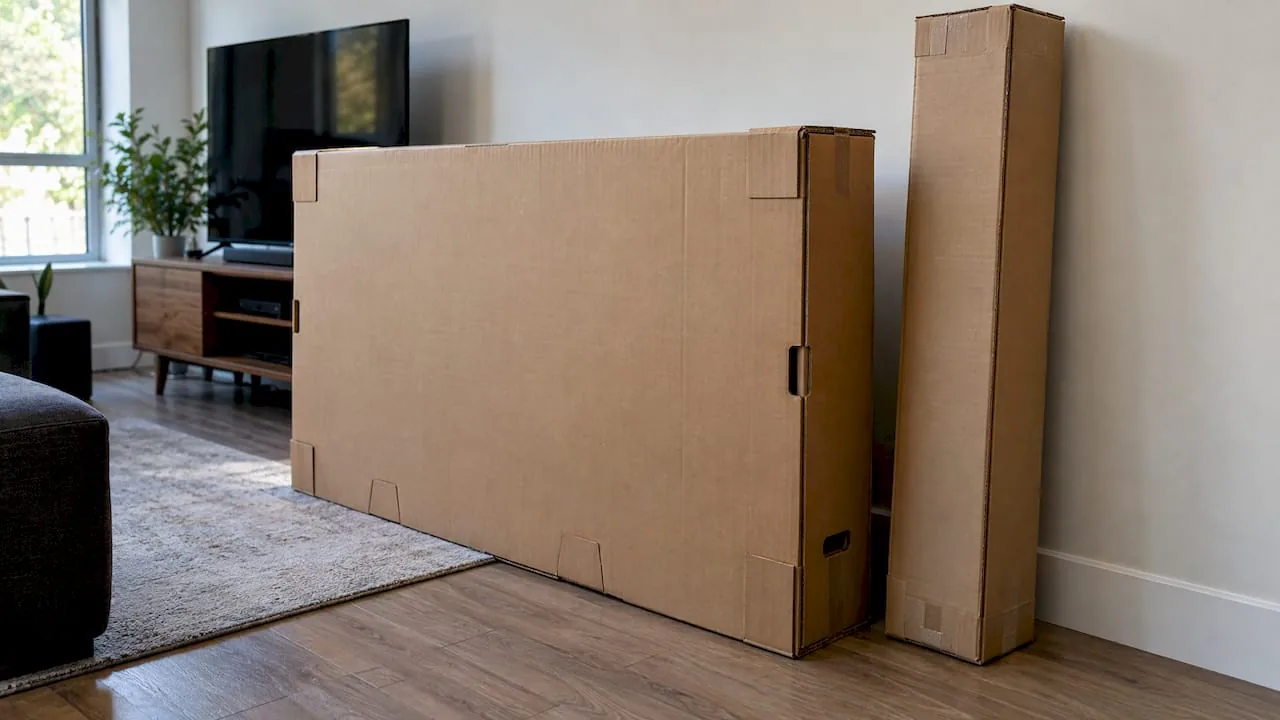
TVs, mirrors and framed art are the items most often damaged by improvised packing. A purpose-made TV box or picture box is cheap compared with a replacement screen. Our guide on how to pack a TV for moving covers the steps. For antiques and one-of-a-kind pieces, see moving antiques: pack, protect, insure.
Tape and Tools
Packing tape
Plan on roughly one roll for every 10 to 15 boxes, and buy a tape gun. Seal the seam on top, then run tape along the sides, and tape the bottom with an extra pass or an “H” pattern, because the bottom carries the weight.
This Old House recommends high-quality tape with a tape gun or dispenser, and names Scotch, Gorilla and Duck among the best brands. The Verge’s moving gear roundup makes a case for paper packing tape: it tears by hand, does not tangle, and you can write on it directly.
Painter’s tape
It is not for sealing boxes. Use it to mark furniture, hold cabinet doors shut and label items without leaving residue on finishes.
Cutter, scissors and markers
Keep a box cutter or utility knife for unpacking and for breaking down boxes afterward. Buy more markers than seems reasonable: they walk away. Thick permanent markers are easiest to read from across a room.
Hand truck, dolly and straps
The Home Depot also lists a dolly or hand truck and moving straps for heavy boxes and furniture. If you hire a crew, they bring their own equipment, so you can skip this item.
Cushioning and Protection
Packing paper, bubble wrap and foam
Packing paper is the everyday choice for plates, glasses, bowls and figurines because it is clean and fills gaps well. Use bubble wrap for electronics, lamps, glass and anything with a delicate surface. Foam sheets work between stacked plates and around framed art.
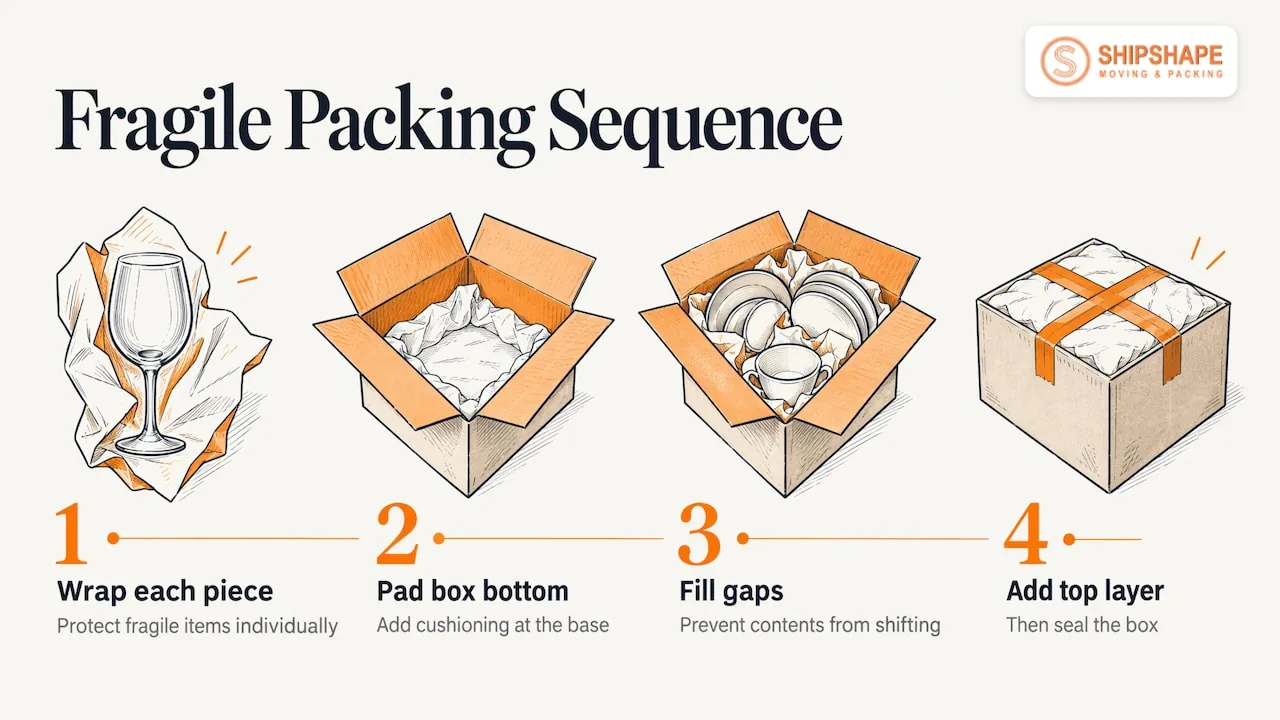
Wrap each fragile piece individually, pad the bottom of the box, fill the gaps so nothing shifts, and add a top layer before sealing. A box that rattles when shaken needs more filler.
Stretch wrap
The Verge calls a wide handled roll of plastic stretch wrap the standout tool of a move. It holds drawers closed, bundles chair legs and hangers together, keeps pads on furniture and wraps loose cords. It also keeps cushions clean on a sofa without trapping them in tape.
Furniture pads, moving blankets and mattress bags
Furniture pads protect finishes and corners on tables, dressers, chairs and sofas, both in the truck and in tight hallways. A mattress bag is cheap protection against dirt, especially in an apartment building where mattresses travel through stairwells and elevators.
Labels and Organization
Labeling is the cheapest part of the whole process and the one that saves the most time on the other end.
- Write the destination room on at least two sides of every box, and on the top if boxes will be stacked. Extra Space Storage’s checklist also recommends marking contents.
- Add a short contents note: “Kitchen: pots and pans.”
- Mark fragile boxes clearly, and mark “open first” boxes with a bright sticker.
- Number the boxes and keep a simple notebook or phone list for inventory.
- Use zip bags for screws and hardware, and tape the bag to the furniture it came from.
Color-coded stickers per room work well because movers can place boxes without reading anything. Put a matching sticker on the door of each room in your new home.
The Essentials Box and Last-Minute Supplies
Pack one clear bin or box you move yourself, not on the truck:
- Phone chargers, medications, important documents
- Toilet paper, soap, towels, a change of clothes
- Basic tools, a box cutter, a few trash bags
- Snacks, water, a few paper plates and cups
- Bed sheets for the first night
What to Pack in the Last Few Days
In the final days, you want the home to stay functional while the rest disappears into boxes. A Redfin guide to packing in three days suggests starting with rarely used spaces such as the garage, guest room and attic, then working room by room and finishing each space before starting the next. Photographing electronics and complex setups before unplugging helps with reassembly.
A realistic final-days order:
- Three days out: garage, closets, guest room, books, decorations, off-season clothes.
- Two days out: most of the kitchen, bathroom extras, wall art, linens.
- The day before: the everyday kitchen, toiletries, the essentials box, and a final pass for tape and markers.
- Morning of: bedding, last-minute charger cords, and the items that must stay with you.
If your timeline is longer, our apartment moving checklist lays out the weeks before the move.
Where to Find Packing Supplies Free or Cheap
New boxes are sold at home improvement stores, big-box retailers and shipping stores. 1-800-GOT-JUNK’s box sourcing guide lists bookstores, liquor stores, coffee shops and grocery stores as good sources of sturdy free boxes, and neighborhood groups such as Nextdoor, Buy Nothing groups and Facebook Marketplace for boxes people are giving away. It puts standard cardboard boxes at about $1.00 to $5.00 each and wardrobe boxes at $12.00 to $20.00.
A few ways to make free boxes work:
- Pick boxes of uniform size so they stack.
- Skip boxes that are wet, crushed, or smell of food.
- Reserve new boxes for heavy loads like books and for items that need strong walls.
- Use towels, linens and clothes as cushioning for items that are not delicate, which cuts paper costs.
If you would rather skip sourcing altogether, our packing service brings the materials and does the work.
Our Perspective
Most of the damage we see in moves traces back to a handful of supply decisions: a box that was too big for its contents, tape that gave out on the bottom seam, or fragile items packed with no filler. None of it takes special skill, but it does take the right materials at the right time.
Our approach is to pack carefully, label so unpacking goes quickly and keep clients informed from the first call to the final box. Good labels cut unpacking time, and clear room names let our crews place things where you want them the first time.
For valuables, we recommend white glove handling, where items get individual care and protection. If you have collections, art or anything you could not easily replace, this is the way to move them.
Use this checklist if you are packing yourself. If your schedule or the size of your move makes that unrealistic, we are happy to handle part of it or all of it.
Dennis
Pack Smarter With ShipShape Moving
We are a licensed moving company based in Berkeley, serving Berkeley, Oakland, San Francisco and the surrounding Bay Area. Our Google rating is 5.0 across 332 reviews. Our crews handle careful packing and labeling, and we also do apartment, large home, office and long-distance moves.
Local moves are billed at $190-$200 per hour, with an $80 truck fee. We provide written not-to-exceed quotes, and we occasionally ask for a deposit to hold a moving date.

See our local moving rates and services or look at residential moving to get a quote. If you are comparing companies, our guide to choosing a moving company explains how to compare three estimates and check FMCSA records for interstate moves.
Pack Smarter for Your Situation
Families in larger homes: start with the garage and attic, buy wardrobe boxes early and plan for more small boxes than you expect. See our tips and tricks for a smooth relocation.
Students: boxes, tape, markers and a hand truck go a long way. Our UC Berkeley move-in checklist covers the campus details.
San Francisco renters: narrow stairs, tight parking and elevator reservations make sturdy small boxes and good labels even more useful. Read how to prepare for moving day in San Francisco.
Offices: use color codes per department and number every crate. Our office move checklist for Bay Area businesses has the full timeline.
FAQ
What packing supplies do I need for a household move?
You need boxes in small, medium and large sizes, packing tape and a dispenser, packing paper and bubble wrap, stretch wrap, furniture pads, permanent markers and labels. Add wardrobe boxes, mattress bags and specialty boxes for TVs or art if they apply to your home.
How many rolls of tape do I need?
A good starting estimate is one roll for every 10 to 15 boxes, with a couple of spare rolls. Taping the bottom seam twice uses more, but it prevents most box failures.
How do I get free packing supplies?
Ask bookstores, liquor stores, grocery stores and coffee shops for sturdy boxes, and check Nextdoor, Buy Nothing groups and Facebook Marketplace. Choose boxes that are dry and uniform in size, and use towels and linens as padding.
What should I pack three days before moving?
Pack rarely used spaces first: the garage, guest room, closets, books and decorations. Save the everyday kitchen, toiletries and the essentials box for the last day.
Sources
- The Home Depot: How to Pack for a Move
- This Old House: Must-Have Moving Supplies for an Easy Move
- The Verge: Favorite tools to help with a move
- Redfin: How to Pack for a Move in 3 Days
- 1-800-GOT-JUNK: Where to Get Moving Boxes
- Room-by-room box guide