How to Check Moving Company Reviews Before You Book
To check moving company reviews, read Google and Yelp for patterns, not star averages, then confirm the company’s California household goods permit in the state’s license search. Reviews tell you how a crew behaves. The permit tells you whether the company is allowed to operate. You need both before you hand over a deposit.
Key Takeaways
- Read the middle of the review list, not just the top: look for repeated details about quotes, damage and final bills.
- Treat reviews as one input. Verify the permit with the California Bureau of Household Goods and Services (BHGS) before you book.
- A company’s own replies to complaints show how it handles problems, so read them as closely as the reviews.
- Fake reviews are illegal under a federal rule, but they still exist, so look for vague praise, bursts of reviews and missing specifics.
- Match the review to your kind of move: a studio in Oakland’s Temescal area and a multi-story home in the hills are different jobs.
Table of Contents
- What reviews can and cannot tell you
- How to read Google reviews of a mover
- How to read Yelp reviews of movers
- Warning signs of fake or unreliable reviews
- Verify the license, not just the stars
- Reviews that mention quotes, deposits and fees
- Match the reviews to your kind of move
- If the reviews raise concerns
- Writing your own review after the move
- Our perspective
- Get a quote from a crew you can check
- FAQ
- Sources
What reviews can and cannot tell you
A good review answers a few practical questions. Did the crew arrive in the window they were given? Did the final bill match the written quote? Was furniture protected on the stairs? Was anything damaged, and what happened next?
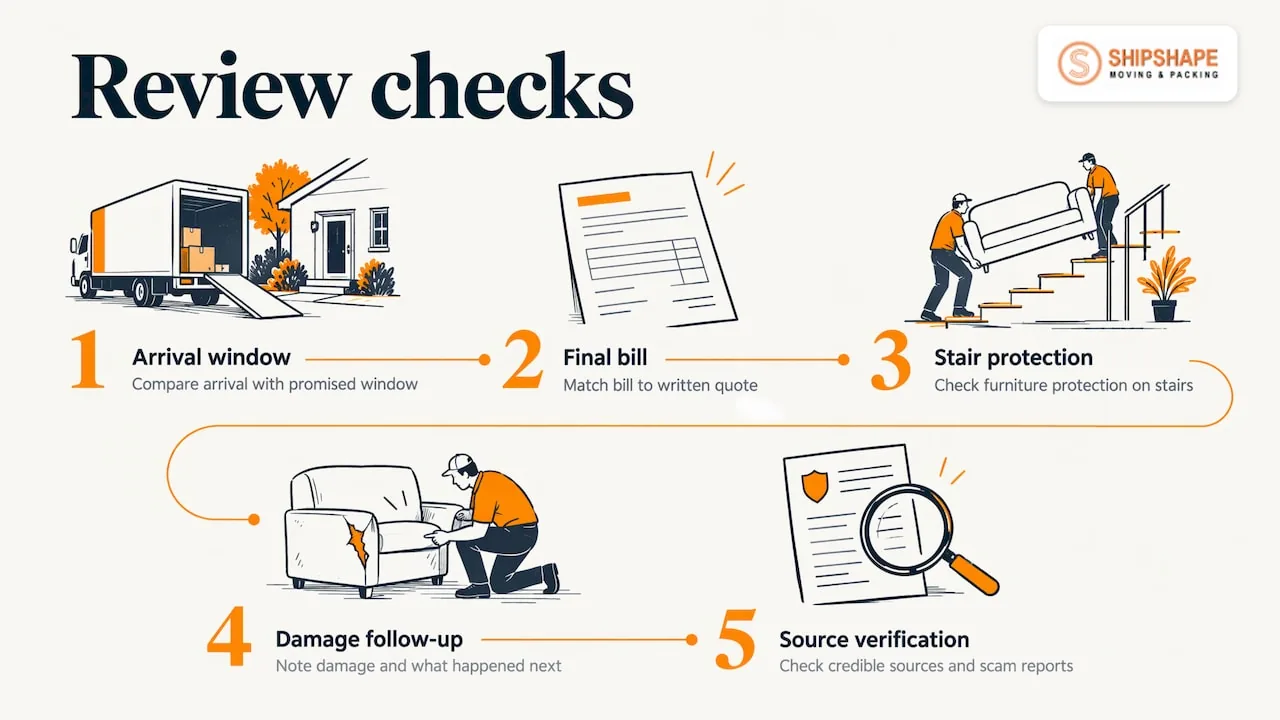
What reviews cannot tell you is whether the company is licensed. The BHGS consumer guide says that not all reviews are reliable, since some are paid for or come from people with a personal interest in the company. It recommends checking a company’s reputation through credible sources and watching for scam reports. That is why this article treats review reading as a short process with a verification step at the end.
If you are planning a move around Oakland, Berkeley or San Francisco, the process is the same. Only the details you look for change, such as street parking, walk-ups, hills and elevator reservations.
How to read Google reviews of a mover
Google reviews are usually the largest pool for Bay Area movers, so start there. Search the company name plus the city you are moving from, open the reviews and sort by newest first, then by lowest rating.
Read the newest and the lowest first
The U.S. Department of Transportation’s Office of Inspector General advises consumers to look past a run of recent glowing reviews. A healthy profile has feedback spread over time, not a cluster in a few weeks.
Then read the one-star and two-star reviews. You are not looking for perfection. You are looking for what the complaints are about:
- A bill much higher than the quote.
- Arrival windows missed with no call.
- Damage with no response from the company.
- Crews that were different from the people who did the estimate.
One late arrival in a busy season is a small problem. The same complaint about the final bill repeated over several months is a pattern.
Look for specifics that match your move
Useful reviews name something checkable: a floor protected, a piano or a sofa taken through a narrow stairwell, a wardrobe box used for a closet, a three-bedroom move finished in a stated block of time. Vague praise (“great service, highly recommend”) says little. Specifics about a job like yours say a lot.
If you are moving from an Oakland apartment with a third-floor walk-up, search the reviews for words like “stairs,” “walk-up” or “parking.” If you are moving an office, look for mentions of planning around business hours. Google lets you search inside a business’s reviews, which saves time.
Check who answers
A business owner’s reply to a bad review is evidence. Compare two kinds of replies: one that names the issue and says what was done, and one that is a copy-pasted apology. Defensive replies that blame the customer are worth noting too.
How to read Yelp reviews of movers
Yelp works a little differently, and it matters for how you read the page. Yelp uses automated recommendation software to decide which reviews appear in a business’s main rating. Yelp explains that reviews that are not recommended are still reachable through a link at the bottom of the page, but they do not count toward the star rating or review count. Scroll down and open that section, because a review there is not necessarily fake. Yelp notes that the software sometimes does not know enough about the reviewer to recommend it.
What to look at on a Yelp page
- Dates. Reviews from the last year or two reflect the current crews and pricing practices.
- Reviewer detail. A profile with other reviews across different businesses is more convincing than one with a single entry.
- The story. Look for a sequence: quote, arrival, work, bill. Reviews that skip all of it tend to be thin.
- Business responses. As with Google, the reply shows how the company handles a dispute.
- Photos. Photos of wrapped furniture or loaded trucks are a good sign that the reviewer was actually there.
Compare platforms, then compare to records
Read the same company on Google, Yelp and any other site you trust. The story should be consistent. If one platform is full of detailed praise and another has repeated complaints about surprise charges, take that mismatch seriously. A simple extra step is to search the company name plus the word “complaint” or “scam.” The BBB’s Know Your Mover study suggests this kind of search as one way to spot a shady mover, and the same search shows you reports that reviews alone may hide.
Warning signs of fake or unreliable reviews
The Federal Trade Commission’s rule on consumer reviews took effect on October 21, 2024. It prohibits selling or buying fake reviews, undisclosed insider reviews and company-controlled review sites posing as independent. The rule also covers using threats to suppress honest reviews. The text of the rule, 16 CFR Part 465 in the 2026 edition, says it is an unfair or deceptive act to write or buy a review that misrepresents that the reviewer exists or used the service. It also bars compensation conditioned on a review expressing a certain sentiment.
A rule does not remove every fake review, so look for these signs:
- A burst of five-star reviews in a short period, then silence.
- Identical phrasing across different reviewers.
- Reviews that never mention the move itself, such as the date, the size of the home or the neighborhood.
- A company claiming long experience, with reviews only from a short period. The DOT Office of Inspector General lists this among its red flags for household goods moving fraud.
- Reviews written by the company on third-party sites, which the same office lists as a warning sign.
The same DOT page lists other red flags that show up in the booking process rather than in reviews: a website with no local address, an estimate given sight unseen over the phone, a rep who pressures you for a deposit “today,” a request for payment only in cash, a money order or a wire, and a rental truck arriving on moving day. If a review says any of these happened, treat it as a serious signal, and if you see them while booking, stop and recheck the company.
Verify the license, not just the stars
Stars are opinion. A permit is a legal status you can look up. The BHGS guide states that California companies moving household goods within California must be licensed with the bureau. BHGS provides a License Search on its household movers page where you can verify that a company is authorized to operate. Enter the company name or permit number and confirm the status is active.
The California Moving & Storage Association adds that a California mover’s license number must appear on all documentation and advertising, and that you should not hire a mover whose license is nonexistent, revoked or suspended. If a company’s website, quote or truck does not show its permit number, that is worth a question before you book.
The same association cautions that if movers are injured at your residence and the company has no workers’ compensation coverage, you may be held liable. Verifying the license and insurance protects you as well as your belongings.
For reference, ShipShape Moving holds California household goods permit MTR 0192323 issued by BHGS, and USDOT number 3549568.
A quick verification routine
- Find the permit number on the company’s website and written quote.
- Run it through the BHGS License Search.
- Confirm that the name, status and location match what you were told.
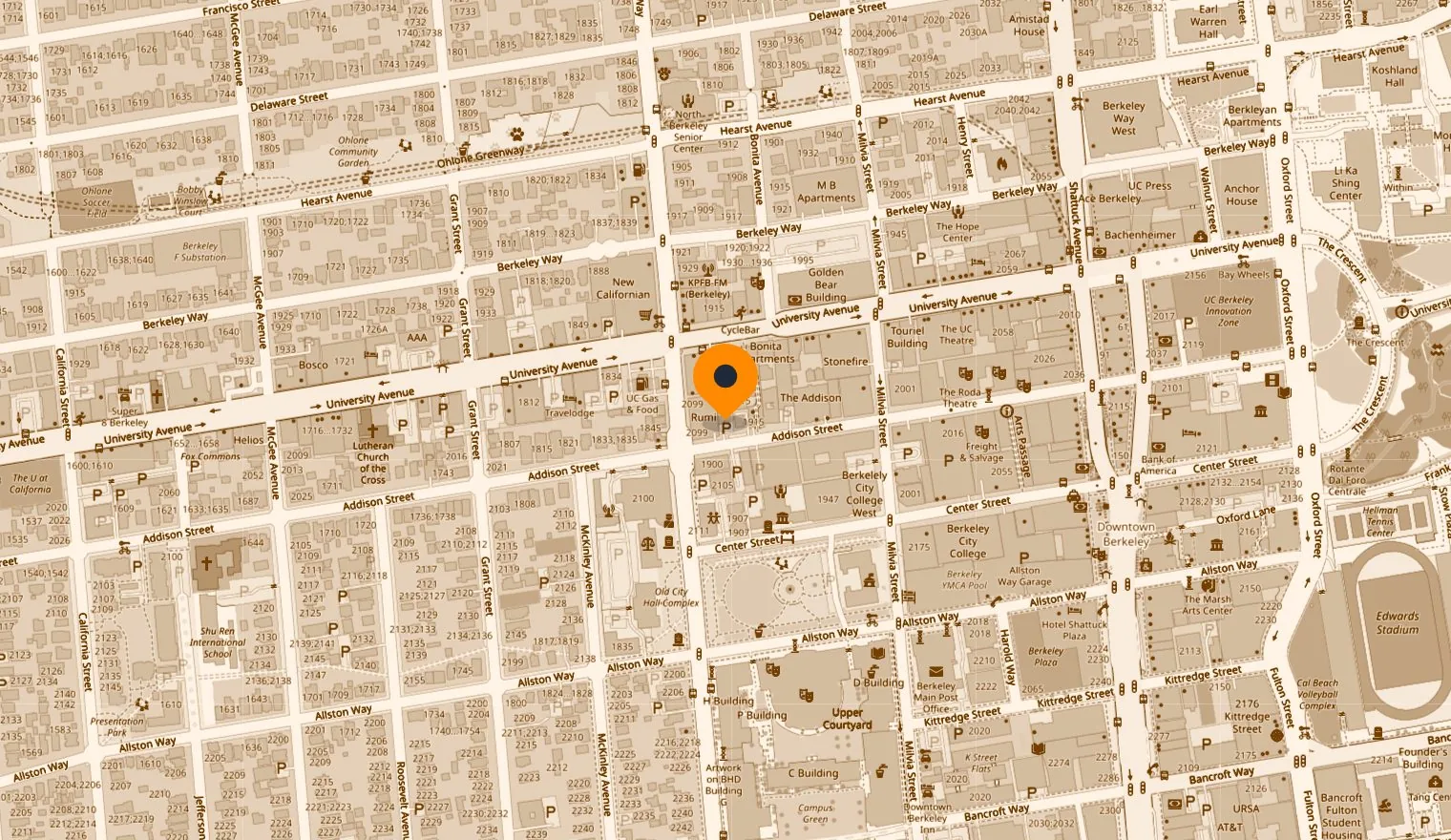
- Check a street-view map of the company’s address to see that it is a real business location, as the DOT Office of Inspector General advises.
- Read reviews with those facts in hand, so that you know whose reviews you are reading.
Reviews that mention quotes, deposits and fees
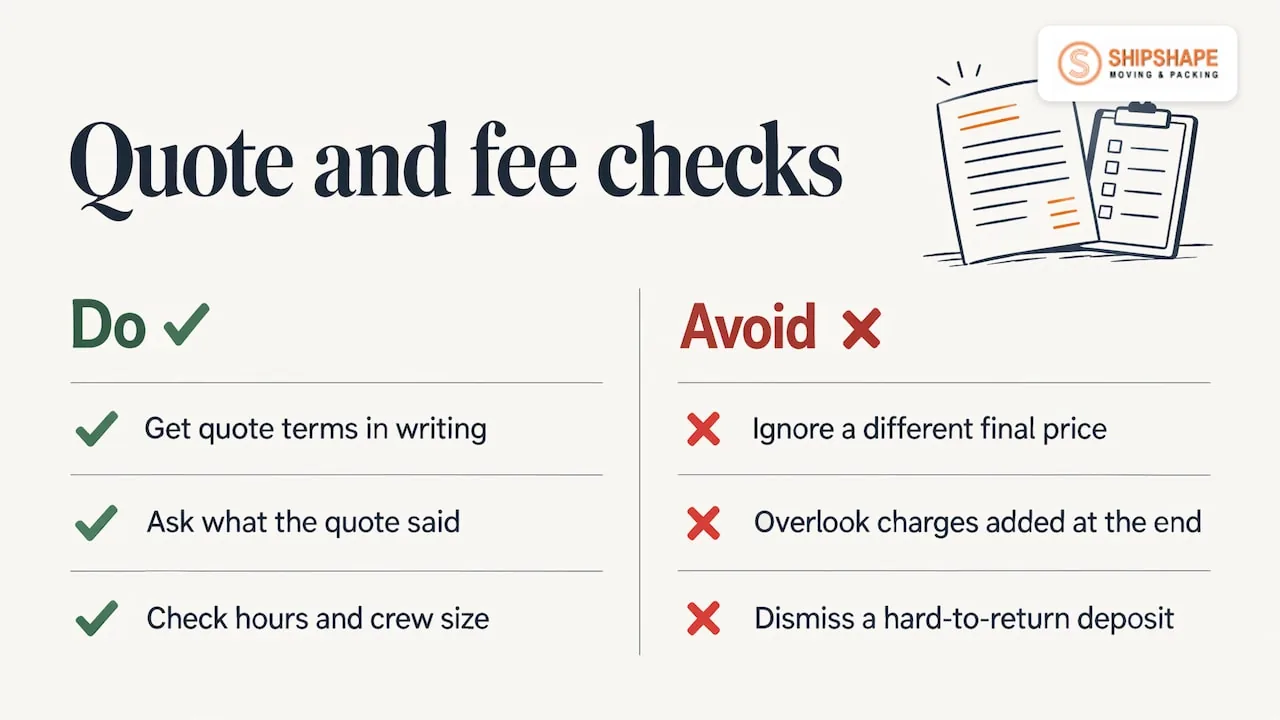
Most complaints about movers come back to money. When you read reviews, flag any that mention a final price different from the quote, charges that appeared at the end, or a deposit that was hard to get back. Compare what you find against how a clear estimate should look.
Before you book, get the terms in writing. Our guides explain how deposits work under California rules, what common moving company fees mean and what moving costs in California to expect in 2026. If you want to read more on permits and insurance, our rules, permits and insurance articles cover them in one place. Having this background makes it easier to tell a detailed, honest review from one that only complains about the price of a hard job.
When a review says “they charged more than I expected,” ask what the quote said. A not-to-exceed written quote, and the hours and crew size it was based on, make a review easy to interpret. A review that does not mention any of that is harder to weigh.
Match the reviews to your kind of move
A mover can be excellent at one job and average at another. Read reviews through your own situation.
| Your move | What to look for in reviews |
|---|---|
| Apartment in Oakland, Berkeley or San Francisco | Stairs, elevator reservations, tight parking, loading from the street |
| Family home in the hills or a large home | Crew size, how long the job took, furniture protection, disassembly and reassembly |
| Office or retail relocation | Planning around operating hours, labeling, coordination with building management |
| Valuables, art or collections | Careful handling, wrapping materials, how damage claims were handled |
| Moving into the Bay Area | Reliability on arrival day, clear communication from the quote forward |
If you are comparing quotes, our guide to choosing a moving company and comparing estimates walks through the process. For businesses, the commercial moving tips cover what to plan before moving day.
If the reviews raise concerns
You do not need to settle for doubt. Decide with evidence:
- Pattern, not incident. One complaint is a data point. The same complaint again and again is a reason to move on.
- Response quality. A company that fixed a problem and said so publicly is a better bet than one that argued.
- Records. If the permit is not active, stop there, whatever the stars say.
- Booking practices. If you are pushed to pay a large deposit immediately or pay only in cash, that is a reason to pause, based on the DOT red flags above.
If you have already had a problem with a mover, BHGS accepts complaints through its website, and the DOT Office of Inspector General points consumers to the FMCSA National Consumer Complaint Database at 1-888-368-7238. Reporting also helps the next reader, because it creates a record that reviews alone cannot.
Writing your own review after the move
When your move is done, a useful review helps the next person. Include the type of home, the neighborhood, the crew size, the date and the quote versus the final bill. Say what went well and what did not. Under the federal rule, a business may not make a reward depend on your review being positive or negative, so write what happened.
Our perspective
Reviews are useful, but they are written after the fact, by people on one of the most stressful days of their year. We think the best way to read them is alongside facts you can check: a company’s permit, how it staffs its crews and what it puts in writing.
That is how we try to run ShipShape Moving. Our crews are full-time ShipShape employees, never subcontractors, and every mover is background checked before their first job. We are based in Berkeley, founded in 2020, and we hold California household goods permit MTR 0192323 and USDOT 3549568. Our hourly rates are published on our website, with a three-hour minimum and an $80 one-time truck fee, so the number you read online is the number you plan around.
Our five 26-foot box trucks each carry a loading ramp, moving blankets, stretch wrap, dollies, straps, floor and door-frame protection, wardrobe boxes and tools to take apart and reassemble furniture as part of a booked move. When you read reviews of any mover, look for exactly this kind of concrete detail. It is what tells you how a move will actually go.
Dennis
Get a quote from a crew you can check
If you have done the research and want a move planned around your building, your street and your schedule, ShipShape handles local moves in Oakland, Berkeley, San Francisco, San Mateo, Palo Alto, San Jose and across the Bay Area. We also handle residential, large home, commercial and packing jobs, plus white glove handling for valuables.

Our rates by card are $190 per hour for 2 movers, $260 per hour for 3 movers and $330 per hour for 4 movers. Paying cash is $10 per hour less than the card rate. A three-hour minimum and a one-time $80 truck fee apply. We provide written not-to-exceed quotes, and the next step is to get a free quote.
FAQ
Are Google reviews or Yelp reviews more reliable for movers?
Neither is reliable on its own. Google usually has more reviews, and Yelp filters them with recommendation software, so the two show different slices of the same company. Read both, check the dates and specifics, and then verify the permit in the BHGS License Search.
Can a moving company’s reviews be fake?
Yes. The BHGS consumer guide warns that some reviews are paid for or written by people with a personal interest in the company. A federal rule that took effect in October 2024 prohibits fake and bought reviews, but you should still look for bursts of five-star posts, identical wording and reviews with no real details.
What should I check besides reviews before hiring a mover?
Check that the company’s California household goods permit is active in the BHGS License Search, that the permit number appears on its paperwork, and that the quote is in writing. Also confirm that the business has a real local address and does not demand cash-only payment or an immediate deposit.
What if a mover has few reviews?
A newer or smaller company may simply have fewer reviews. Lean on what you can verify: the permit status, a written quote, the company’s address and how clearly it answers your questions about crew, trucks and pricing.
Sources
- Consumer Guide to Household Moving, California BHGS
- Household Goods Moving Fraud, DOT Office of Inspector General
- Trade Regulation Rule on the Use of Consumer Reviews and Testimonials, Federal Register, 2024
- 16 CFR Part 465, Rule on the Use of Consumer Reviews and Testimonials, 2026 edition
- Recommendation software, Yelp Trust & Safety
- Selecting a Mover, California Moving & Storage Association